Accredited as a "University Hospital Institute" (IHU) in May 2023 by the French government under the "Health Innovation 2030" plan, IHU SEPSIS is the first French center for research, care, and training exclusively dedicated to the fight against sepsis.
Context
Sepsis is a major global public health issue, affecting approximately 50 million people and causing nearly 11 million deaths each year.
In light of the scale of this problem, the World Health Organization (WHO) recognized sepsis as a global public health priority in 2017. It urged member states to implement measures to reduce its impact on health, the economy, and society.
In 2018, Professor Djillali Annane submitted a report to the French Ministry of Health proposing 10 measures to improve the prevention, diagnosis, and treatment of sepsis in France. Since then, the Ministry - in collaboration with medical societies and the patient group France Sepsis Association - has been leading several initiatives to:
- Improve the monitoring of sepsis cases,
- Raise awareness and inform the general public,
- Strengthen training for healthcare professionals,
- Support research and innovation to improve prevention, screening, and treatment.
In France, sepsis accounts for:
- A mortality rate of approximately 23% among affected patients,
- Severe, lasting after-effects for many survivors,
- An average cost of around €16,000 per patient,
- Several billion euros in healthcare expenditures annually.
Currently, treatment relies primarily on antibiotics, infection control, and life support (such as respiratory and circulatory assistance). However, these treatments are not always sufficient, as every patient responds differently to the illness.
To improve patient care, it is essential to develop a more personalized approach to medicine, capable of better predicting how sepsis evolves and tailoring treatments to each individual. This requires close collaboration across multiple scientific disciplines, including biology, medicine, mathematics, physics, and data science.
Background and Origins
Over the past decade, the Raymond-Poincaré University Hospital has brought together researchers in microbiology, virology, immunology, epidemiology, and public health alongside clinicians to create a unique research environment dedicated to sepsis.
In 2018, their work led to a major breakthrough: the routine use of corticosteroid therapy to treat septic shock. Building on this success, they strengthened their program through the SEPSIS University Hospital Federation (FHU) in 2019 and the RECORDS University Hospital Research Project (RHU) in 2020, which received €10 million in funding.
It was a natural progression for these sepsis research teams to join forces with Université Paris-Saclay, UVSQ, AP-HP, Inserm and CEA, and submit the SEPSIS project (formerly PROMETHEUS) to the IHU 3 call for projects in 2022.
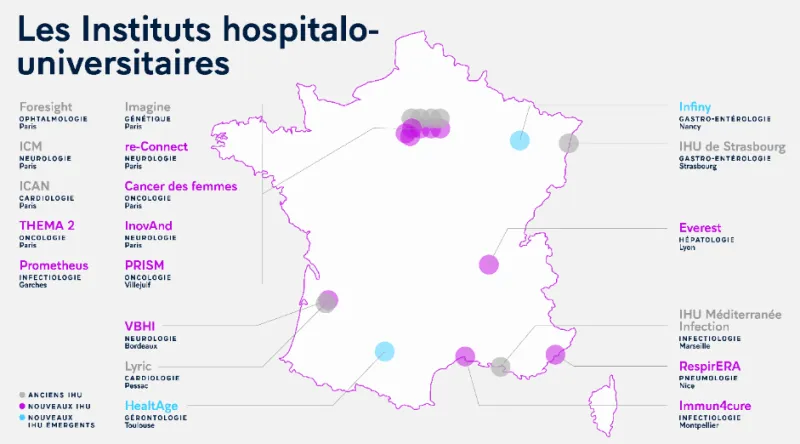
Led by Université Paris-Saclay (coordinator) and four other founding members (AP-HP, CEA, Inserm and UVSQ), IHU SEPSIS aims to reduce sepsis-related mortality and morbidity by accelerating clinical innovations and their transfer to the patient's bedside. With over 300 researchers and clinicians, IHU SEPSIS possesses robust expertise in the field of sepsis, built through numerous clinical projects and industrial partnerships.
A visual recap of the IHU SEPSIS launch on September 17, 2024, at the Raymond-Poincaré Hospital in Garches