Having earned her PhD in Microbiology in December 2025, Capucine reflects on her doctoral years at the IHU SEPSIS, within the Immunoanalysis Studies and Research Laboratory (LERI) of the Medicines and Healthcare Technologies Department (DMTS) at the CEA.
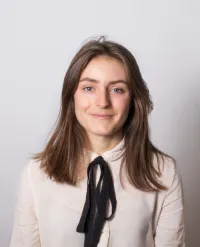
Capucine Treille
- Field / Laboratory / Team: Microbiology, CEA/DMTS/SPI/LERI
- PhD supervisors: Hervé Volland, Hervé Boutal and Karla Perez-Toralla
- PhD thesis title: Development of a multiplex LAMP device for the rapid diagnostic of bacteraemia
- PhD start date: October 2022
- PhD defense date: December 17, 2025
- Education & pre-PhD training: Pharmacy-Engineering dual degree
- Publications: Manuscript under revision
- Contact
Could you explain your research?
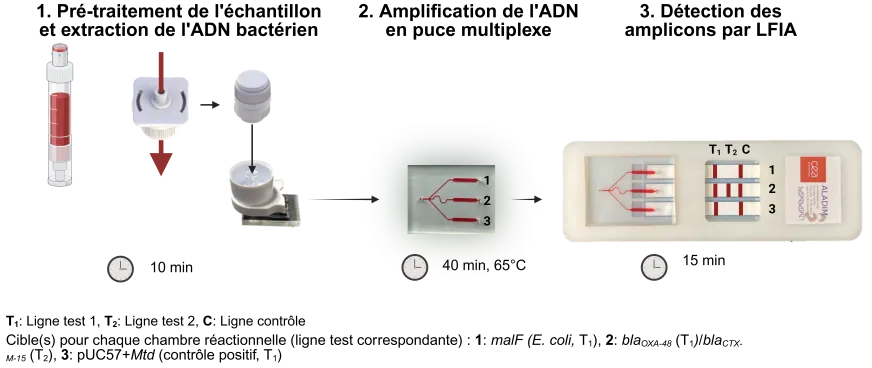
My research focuses on the development of a device designed to accelerate the diagnosis of bloodstream infections (bacteremia) while making it accessible, even in laboratories that lack advanced infrastructure. During my PhD, I developed a rapid diagnostic device that can be used in minimally equipped laboratories to identify the bacterium Escherichia coli as well as two of its antibiotic resistance genes.
The device relies on a simple bacterial DNA extraction process, followed by isothermal amplification using Loop-Mediated Isothermal Amplification (LAMP) within a microfluidic chip. The resulting amplification products are then detected using a lateral flow test strip. Evaluation with clinical isolates has already demonstrated promising performance while also highlighting opportunities for further development to enable its implementation in clinical settings.
What is the connection between your research and sepsis? How could it contribute, in the long term, to a better understanding, prevention, or management of sepsis?
Bloodstream infections (bacteremia) can progress to sepsis if not diagnosed and treated promptly. Rapid diagnosis enables the timely administration of the appropriate treatment, thereby reducing the risk of severe complications.
What was the main challenge you faced during your PhD?
As my PhD project was highly multidisciplinary, I had to manage several aspects of the research simultaneously. This required making strategic decisions to keep the project moving forward and ultimately deliver a functional diagnostic device by the end of my PhD, allowing it to be evaluated using clinical isolates.
How did the IHU provide a supportive environment for you as a young researcher?
The IHU SEPSIS allowed me to place my research project within a broader, more comprehensive scientific initiative, opening up new perspectives and avenues for reflection.
What is your current position?
I am currently a Global Application Specialist at bioMérieux.
Thank you for taking the time to answer our questions, and we wish you every success in your new role!
Latest news
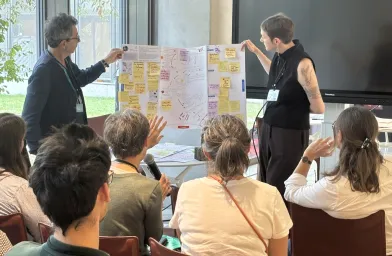
On Thursday, September 24, 2026, the “Bridge the Gap” event, organized by Claire Richards and Roland Cahen, brought together 24 biologists, physicians, researchers, professors, and designers to discuss rapid Point-of-Care diagnosis of sepsis.
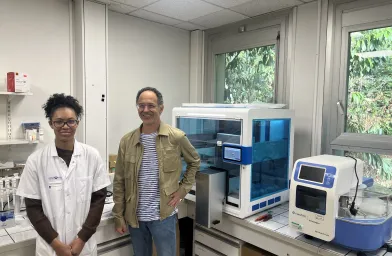
Maëlisse is a PhD student at MICALIS, INRAe. To gain a better understanding of the reality of sepsis in a hospital setting, she swapped her researcher’s lab coat for a clinical one for a week of shadowing in the Intensive Care Unit at Raymond-Poincaré Hospital in Garches.