How can rehabilitation be made clearer, more motivating, and more rewarding? This was the challenge at the heart of the HANDFUL workshop (HAnd-centric Neuromuscular Dexterity Training Interfaces for FUnctional Rehabilitation of Sepsis Patients' Limbs), conducted from October 2025 to April 2026 with thirty-two second-year DN MADE students at ENSAAMA Olivier de Serres.

Their mission was to design novel devices and rehabilitation protocols to support hand recovery in post-sepsis patients, working alongside neurologists, physiotherapists, occupational therapists, and psychomotor therapists.
A challenge far beyond sepsis itself
A stay in intensive care frequently results in long-term impairments collectively known as Post-Intensive Care Syndrome (PICS). Among these, ICU-acquired neuromyopathy often affects the extremities, particularly the hands. Reduced blood pressure and hypoxia, the use of neuromuscular blocking agents during intensive care, prolonged muscle inactivity, and damage to - or even necrosis of - motor axons can all severely compromise hand function. Neuronal and muscular regeneration takes months. Without effective functional rehabilitation, many patients struggle to regain independence in everyday activities, with profound consequences for their well-being and dignity, while placing an additional burden on healthcare systems through prolonged care needs.
Successful rehabilitation ultimately depends on one key factor: adherence. To regain the use of their hands, patients must consistently perform their prescribed exercises, including those carried out independently at home. Yet this is precisely where rehabilitation often falters. Home exercises are frequently perceived as repetitive, monotonous, and unrewarding, leading to dropout rates estimated between 50 and 75 percent in the literature. Any approach that restores motivation, provides a sense of achievement, or encourages curiosity can therefore make a meaningful difference.
Seventeen distinct rehabilitation concepts developed by students
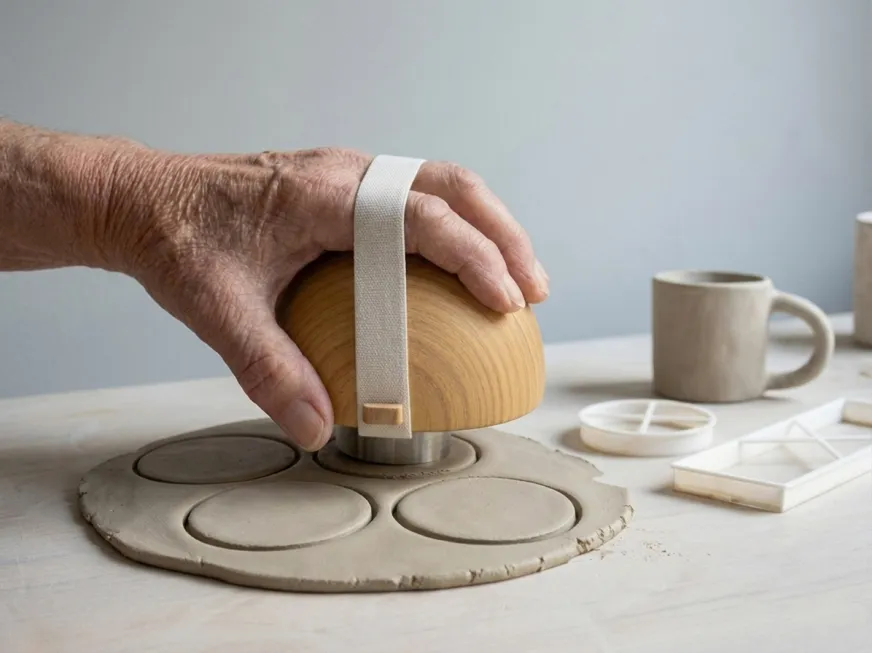
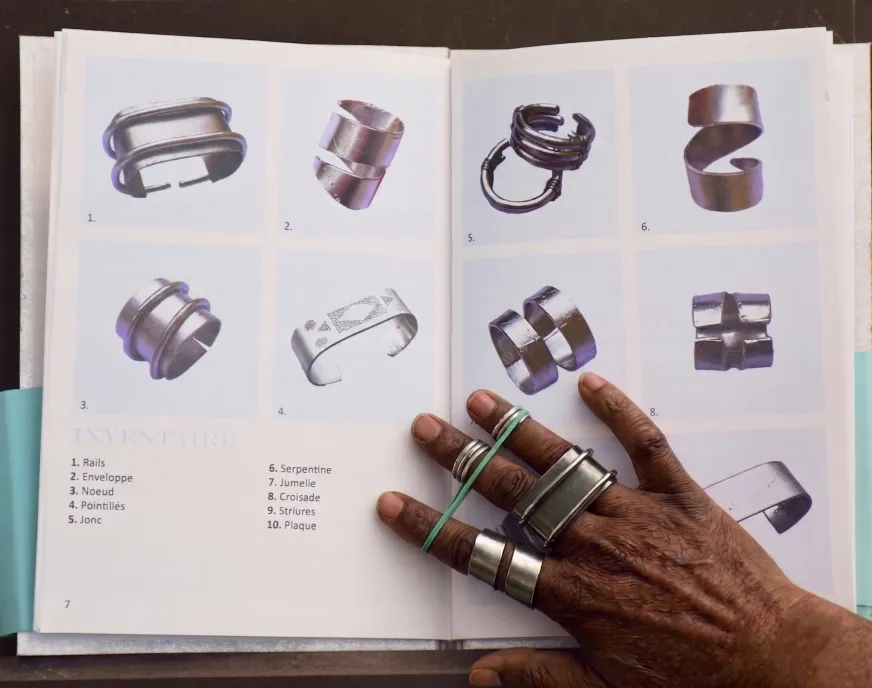
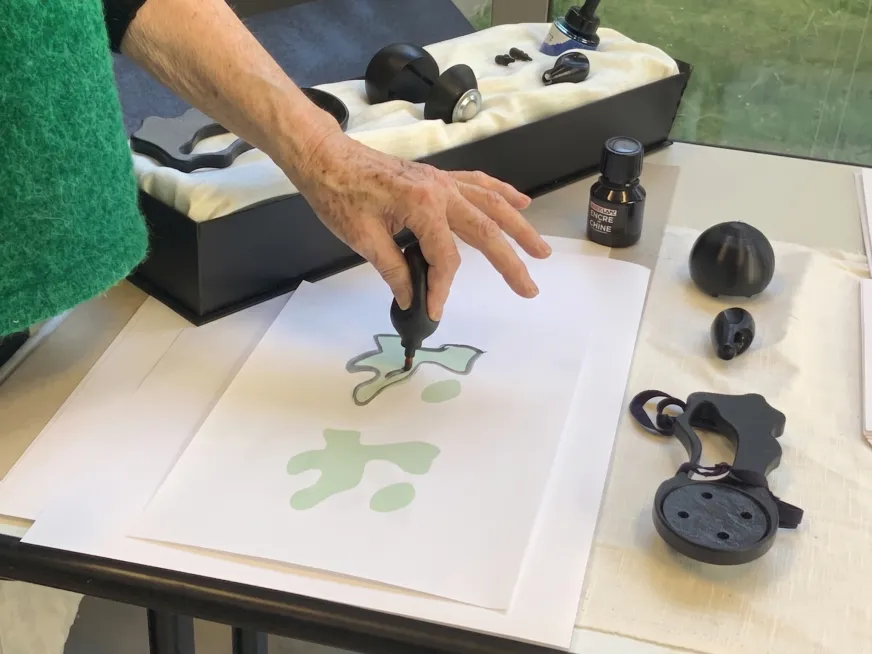
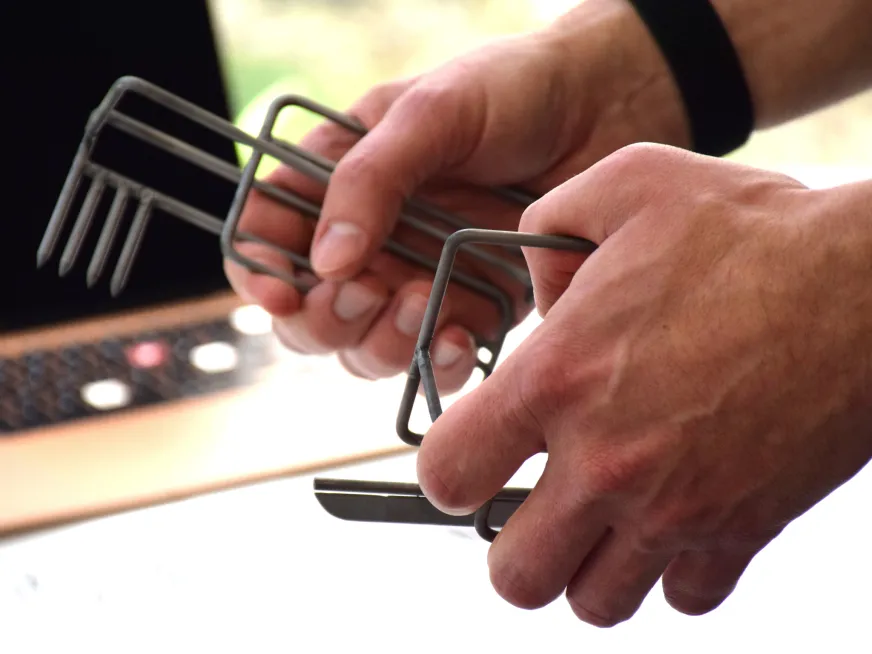
Their projects explored several complementary directions: embedding rehabilitation exercises into everyday routines (such as opening a jar of cream or handling household utensils); transforming rehabilitation into a rewarding learning experience through activities such as ceramics, calligraphy, or playing musical instruments; introducing playful interactions through adaptive game controllers, collaborative construction games for families, or interactive smartphone cases; and giving rehabilitation an aesthetic and social dimension through functional jewellery or redesigned cutlery. Every concept was developed into a manipulable prototype, offering a tangible demonstration of its potential therapeutic value for future patients.
A workshop driven by Design Research
The project emerged from a Design Research and Health partnership between Matthieu Savary and ENSAAMA Olivier de Serres. Matthieu is a PhD candidate in Design at the CRD (ENS Paris-Saclay & ENSCI - Les Ateliers) and the LISN (Université Paris-Saclay). His doctoral research is funded by the IHU SEPSIS, where he is developing what he describes as Design Frameworks, grounded in a new epistemology of design. Within this context, he initiated and co-supervised the HANDFUL workshop dedicated to post-sepsis hand rehabilitation. Throughout the project, the students were supervised by their instructors Romain Engel and Christophe Thélisson, and their work was regularly reviewed by Påvel Lindberg (Research Director in Neuroscience, INSERM, Paris Institute of Psychiatry and Neuroscience), a specialist in post-stroke hand rehabilitation.
Text written by Matthieu Savary.
The 32 participants (photo above) were all second-year (L2) students in the DN MADE Object Design programme, specializing in Services and Uses, at ENSAAMA Olivier de Serres:
In alphabetical order: Iris Arnould, Clémence Baltzer, Cléa Banchereau, Janik Baumann, Inatea Bruggmann, Mathys Caetano, Salomé Challamel, Gabrielle De Broca, Etoile Desmoulins, Rose Fillion, Marie Gilet, Albane Giraudet, Églantine Gosselin, Victoire Goyon-Teneze, Zarina Ibragimova, Chinmayi Kulkarni, Camille Lestra, Lilas Le Guével, Zélie Mastrilli, Sidonie Menesse, Thibaut Moreau, Rémi Neichel, Noémie Noël, Tara Ourabah Ramdani, Romain Paris, Jules Patat, Eugénie Périer, Lilou Rivasseau, Emma Rolland, Tancrède Saunier, Daphné Valluis, Nimshita Warnakulasuriya
First positive feedback from a former patient
For Krista, a sepsis survivor who underwent partial hand reconstruction, people 'don't realise how important and complex the functioning of our hands and fingers is and how difficult life becomes if you lose (part of) that functionality.' She is convinced that 'the designs/tools may also be very important for other than sepsis survivors, e.g. patients with Parkinson or other neurological conditions, or patients with polyneuropahy problems as result of chemo treatment.'
Latest news
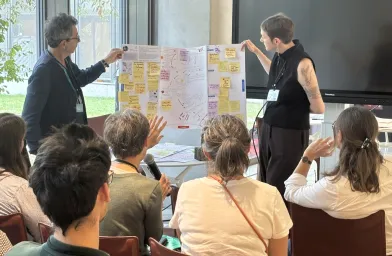
On Thursday, September 24, 2026, the “Bridge the Gap” event, organized by Claire Richards and Roland Cahen, brought together 24 biologists, physicians, researchers, professors, and designers to discuss rapid Point-of-Care diagnosis of sepsis.
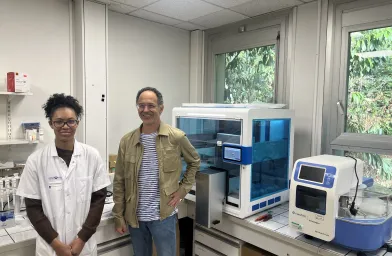
Maëlisse is a PhD student at MICALIS, INRAe. To gain a better understanding of the reality of sepsis in a hospital setting, she swapped her researcher’s lab coat for a clinical one for a week of shadowing in the Intensive Care Unit at Raymond-Poincaré Hospital in Garches.